- To
- Adult, wellness and nightlife brand teams
- From
- BrandAfterdark
- Re
- Adult PR
- Date
- · 7 min read
Adult PR story angles editors will actually run
An adult brand gets covered when the story would still matter if its name were removed. Six angles that pass that test, one that rarely does, and how to tell them apart before you pitch.
The test every angle must pass
Before pitching anything, remove your brand's name from the story and read it again. If a reporter's readers would still care, you have an angle. If the story collapses without your name, you have an advert, and editors will treat it like one.
Relevance is also wider than a beat. In Muck Rack's State of Journalism 2026, 78% of journalists said a pitch feels genuinely relevant when it directly affects the community their audience belongs to. For adult brands, that community is often larger than it first looks: users, workers, parents, regulators and local residents.
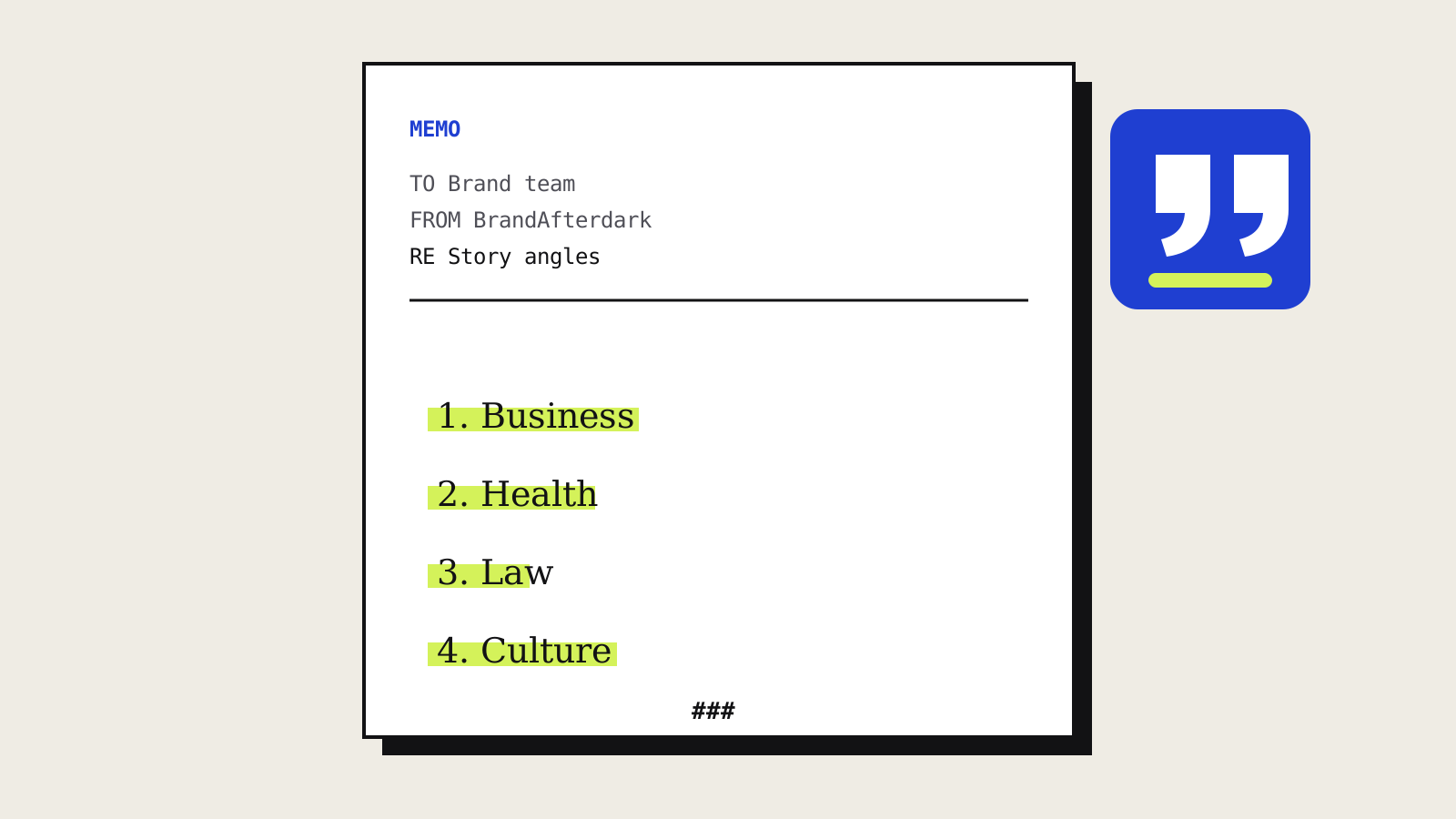
Business
Funding, hiring, revenue milestones, new markets and hard decisions are business news in any industry. Business desks will cover an adult company that behaves like a company: named founders, clear numbers and a reason the news matters beyond the firm itself.
Health and wellness
Sexual wellness products can be covered as health stories, provided every claim is one the brand can support. Useful angles include safety standards, accessibility, conditions that affect sexual health, and what users report. Avoid anything that reads as a medical promise.
Law and policy
Laws that change how people use a product are reliable news. Age verification is the clearest example: in June 2025 the US Supreme Court upheld Texas's age-verification law for adult websites in Free Speech Coalition v. Paxton, and by then about two dozen states had passed similar laws.
A brand that can explain what a change means for ordinary users, clearly and without spin, becomes a source reporters return to. That is also the heart of expert commentary.
Data
Original numbers are among the most valued things a pitch can carry; journalists in the same 2026 survey ranked original data third, after relevance and access to sources. A short survey, or anonymized patterns from your own users, can give a reporter something nobody else has. How to do that properly is in data-led PR.
People and place
Profiles of founders, workers and customers carry stories that statistics cannot. Local angles work too: a venue's anniversary, a city ordinance, an event that brings visitors. Regional reporters can be receptive to adult businesses for a simple reason: the story is about their town.
What rarely works
- Announcements with no wider point.
- Anything explicit, including in images or links.
- Stunts designed to shock. They can get attention once, and make every later pitch harder.
- Claims the brand cannot back up.
When you have an angle, the next step is choosing the few reporters who cover it; see media outreach and our adult PR service.
On the record: questions
Rarely on its own. It becomes one when it answers a wider question: a new category, a safety improvement, a response to a law, or data about how people use it.
On policy that affects its customers, yes, carefully and factually. Taking sides on unrelated politics tends to cost more trust than it wins.
Aim for one strong angle a quarter and a few chances to comment on news in between. A steady rhythm beats a burst of weak announcements.