- To
- Adult, wellness and nightlife brand teams
- From
- BrandAfterdark
- Re
- Data
- Date
- · 7 min read
Data-led PR for adult brands: surveys and first-party data that hold up
Original data is one of the few things an adult brand can offer a reporter that nobody else has. It only works if the numbers survive a skeptical editor: a real question, an honest sample, and full disclosure.
Why data works for adult brands
Reporters are cautious about adult brands, and they should be. Data changes the conversation. A finding about how people date, shop or stay safe is news on its own terms, and the brand becomes the source rather than the subject. Journalists in Muck Rack's State of Journalism 2026 ranked original data among the most valuable things a pitch can include.
The catch is that data stories are checked harder than any other kind. A number that falls apart under one question can end a relationship with a reporter.
Start with a question worth answering
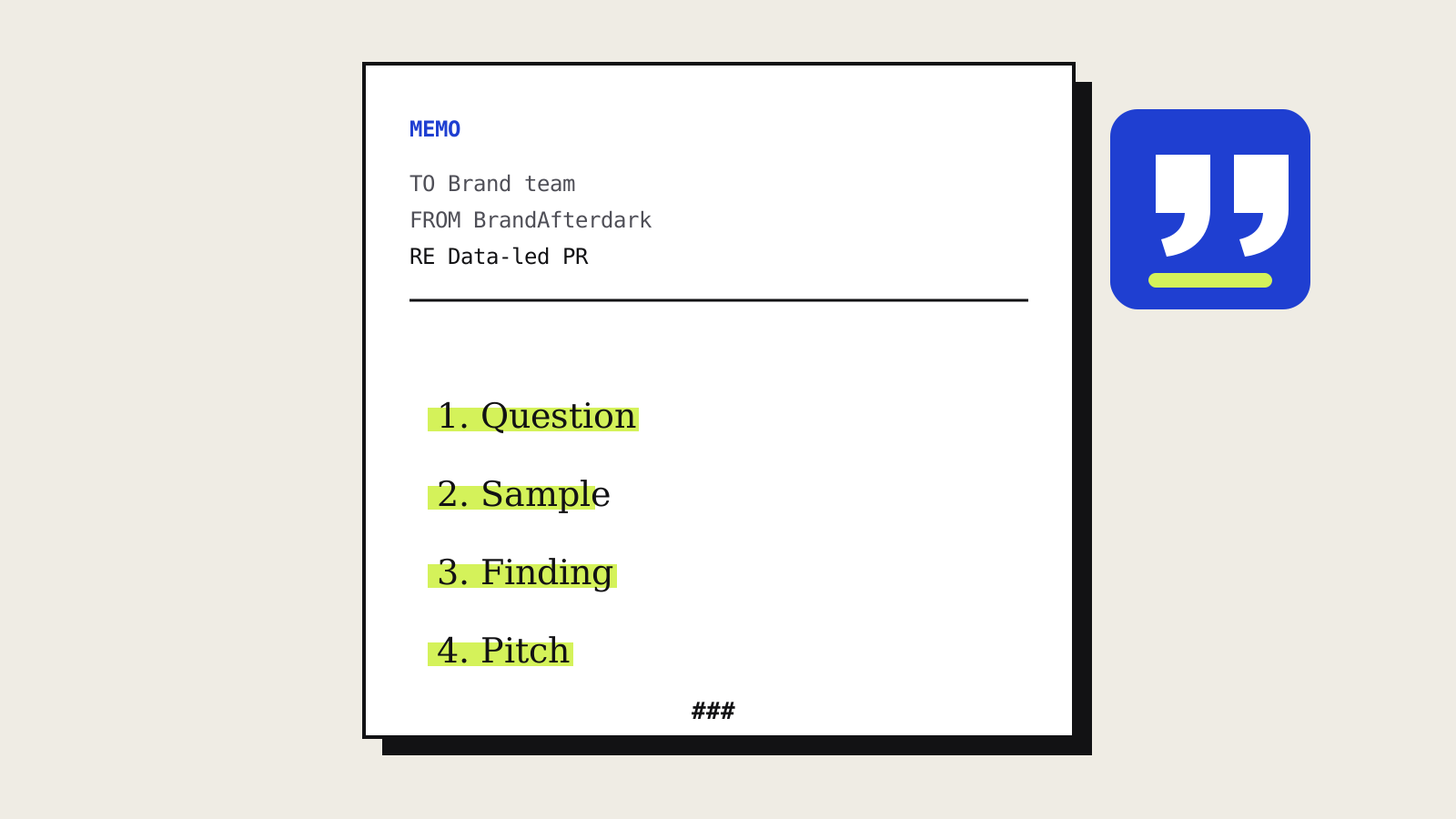
Begin with something a reporter's readers would want to know, not with the answer your brand hopes for. Good questions are specific and current: how many adults check a date's identity before meeting, how people feel about age-verification rules, what stops people buying a wellness product. Write the questions neutrally. Leading wording is the first thing an editor looks for.
Two sources of numbers
- A commissioned survey. An independent research firm asks a defined group, such as US adults, a short set of questions. Around 1,000 respondents is common for a national story.
- Your own first-party data. Anonymized, aggregated patterns from how people use your product. Often more interesting than a survey, and more sensitive.
With first-party data, publish patterns, never records. Remove any group small enough to identify, and make sure the use fits your privacy policy before anything leaves the building.
Disclose everything a skeptic would ask
The American Association for Public Opinion Research sets out what a published survey should disclose. Its minimum list includes:
Methods note
- Who sponsored the survey and who conducted it
- The exact wording of every question reported
- The population surveyed and how respondents were recruited
- Total sample size, method and dates of data collection
- Any weighting, and an estimate of sampling error where it applies
Put this note at the bottom of every release and on a page of your site. A reporter who can check the method has a reason to trust the number.
Be careful with margin of error
Many brand surveys use online opt-in panels, where people sign up to take surveys. AAPOR guidance says it is best to avoid the term "margin of error" with samples like these, because they are not random draws from the population. Say that respondents opted in, describe any weighting, and let the method speak for itself.
If 31% said yes, write 31% or "nearly a third", not "a third" and never "most". Reporters compare the headline to the table.
From numbers to a pitch
Pick the one finding that surprises, and lead with it. Offer the full table, a named spokesperson who can explain it, and a chart a reporter can reuse. How that pitch should read is set out in media pitching, and an annotated example is on our media outreach page. Data campaigns are also a core part of adult digital PR.
On the record: questions
Around 1,000 US adults is a common size for a national story, and it leaves room to report on large subgroups. Smaller samples can work for a narrow audience, as long as you say so.
Yes, but report it as a survey of your customers, not of Americans. Reporters will ask who answered, and the honest answer protects the story.
Only in aggregate, with no individual traceable, and in line with your privacy policy. Publish patterns, never records, and leave out any group small enough to identify.